
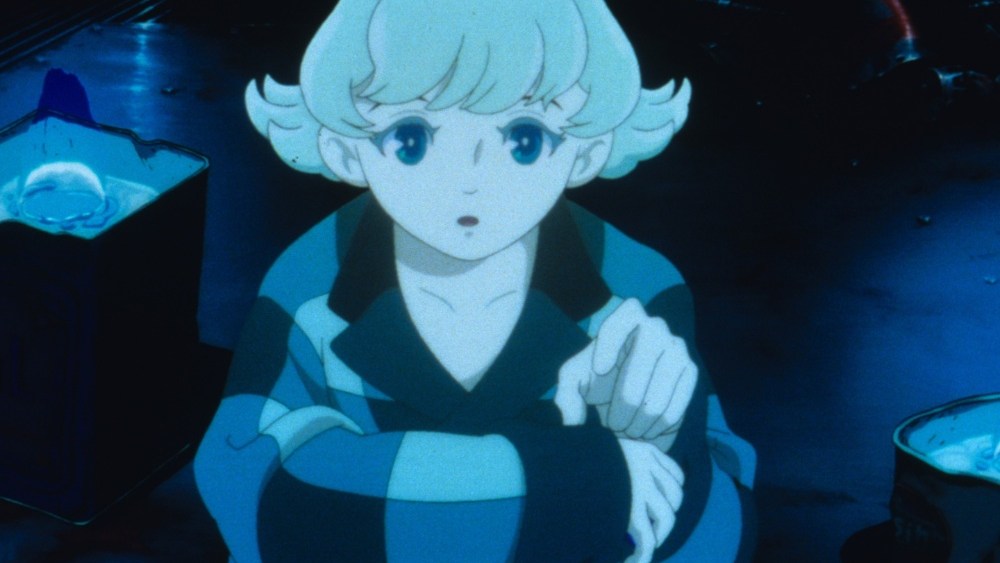
Animation master Rintaro is set to visit Korea for the first time in 17 years to attend the 31st Busan International Film Festival (BIFF). BIFF will feature a 13-film special program dedicated to Japanese animation, including works by Rintaro and four emerging directors.
Rintaro’s Return to Korea for Busan Film Festival
The 31st Busan International Film Festival (BIFF) has announced a special program focusing on Japanese animation. This retrospective includes 13 films and marks a significant return for animation director Rintaro to Korea after a 17-year absence. He will be joined by four directors representing the next generation of Japanese animators.
This visit represents Rintaro’s first time in Korea in 17 years. The festival aims to highlight the rich history and influence of Japanese animation through this curated selection of films.
Busan’s Japanese Animation Special Program
The festival’s “Special Program in Focus” is dedicated to exploring Japanese animation across a full century. The lineup combines seminal classic films with new, highly anticipated releases. It also includes a European film that profoundly influenced generations of Japanese animators.
Many of the films in the program have had limited theatrical runs in Korea, with several scheduled for their Korean premieres at BIFF. The festival seeks to offer audiences a rare chance to experience these animated works on the big screen.
Notable Films in the Program
Among the program’s classic selections is Yabushita Taiji’s “The White Snake Enchantress” from 1958. This film, an adaptation of a Chinese folk tale, was the first Japanese animated feature produced in full color.
Its impact was profound, deeply affecting a young Hayao Miyazaki, who described its viewing as leaving him in tears until dawn, as noted in his writings.
Another significant work featured is Yamamoto Eiichi’s “Belladonna of Sadness” (1973). This experimental film, produced by Mushi Production, was aimed at adult viewers and based on Jules Michelet’s “La Sorcière.” It gained international recognition when it was invited to the 1973 Berlin Film Festival and later developed a global cult following after a 4K restoration in 2016.
Tezuka Osamu’s vision is represented in “Phoenix 2772 (Space Firebird)” (1980). This film draws from Tezuka’s extensive “Phoenix” manga series. The 12-minute opening sequence, which uses only music and visuals to depict the protagonist’s journey without dialogue, is particularly noted.
Mamoru Oshii’s “Angel’s Egg” (1985), created with illustrator Yoshitaka Amano, relies heavily on biblical symbolism and imagery with minimal dialogue. The film’s distinctive visual style influenced Oshii’s later work, including “Ghost in the Shell” (1995).
“Memories” (1995), a project overseen by Katsuhiro Otomo, creator of “Akira” (1988), is returning to BIFF three decades after its screening at the festival’s inaugural edition. The program will showcase a 2025 remaster celebrating the film’s 30th anniversary, featuring all three episodes of the omnibus.
Rintaro himself directed “Metropolis” (2001), based on Osamu Tezuka’s 1949 manga. Katsuhiro Otomo wrote the screenplay for the film, which was a significant undertaking, taking five years to produce and boasting one of the largest budgets in Japanese animation history at the time. Rintaro also directed “Galaxy Express 999” (1979), another celebrated work in his filmography.
The program also includes Yuasa Masaaki’s feature directorial debut, “Mind Game” (2004), which adapted Robin Nishi’s manga. The film received the Grand Prize in the Animation Division at the 2005 Japan Media Arts Festival and the 2004 Ofuji Noburo Award for Animation.
Morita Shuhei’s directorial debut, the 24-minute short “Kakurenbo” (2004), combined 3D CG with cel-style rendering, an innovative approach for its time that built a cult following. Morita later earned an Academy Award nomination for Best Animated Short Film for “Possessions” (2013).
The program concludes with Paul Grimault’s “The King and the Mockingbird” (1952, 1980). Grimault worked on this film for decades after an initial cut, which won a prize at the Venice Film Festival, was pulled from circulation. Hayao Miyazaki paid homage to it in his 1979 directorial debut, “Lupin III: The Castle of Cagliostro”.
New Generation of Directors at BIFF
Alongside Rintaro, the Busan International Film Festival will host four emerging directors: Kadowaki Kohei, Katanosaka Ryo, Natsume Shingo, and Shinomiya Yoshitoshi. These four filmmakers represent the newer wave of talent in Japanese animation and will be in attendance at BIFF.
Natsume Shingo, known for directing episodes of “One-Punch Man” (2015), presents his film “Ghost – End of Night”. The production was handled by Madhouse Inc., and the film is slated for a 2027 theatrical release in Japan.
Katanosaka Ryo’s 36-minute theatrical short, “Shiranui”, was produced by CoMix Wave Films. Katanosaka personally hand-drew nearly two-thirds of the picture’s 325 rough cuts.
Kadowaki Kohei’s rotoscoped feature “We Are Aliens” has garnered attention for its realistic aesthetic and screened at the Cannes Film Festival’s Directors’ Fortnight and in competition at the Annecy International Animation Film Festival.
Shinomiya Yoshitoshi’s 76-minute feature “A New Dawn”, distinguished by its palette inspired by ‘Paris Green,’ marks his directorial debut and was the first by a first-time feature filmmaker to compete at the Berlin International Film Festival. It also won the Jury Award in Annecy’s Contrechamp section.
Busan International Film Festival Details
BIFF festival director Jung Hanseok stated, “Animation has recently become one of the most dynamic forms in global cinema, bridging East and West.
That is why, for this year’s major Special Programs in Focus, we wanted to take a closer look at the world of Japanese animation, long one of the great traditions and powerhouses of the medium.”
Jung explained that the program prioritized original theatrical works and films demonstrating bold precedents or forward-looking visions, with a preference for those seldom shown in Korea.
He noted the deliberate exclusion of works by Hayao Miyazaki and Isao Takahata, opting instead for films that influenced their own directorial styles. The festival runs from October 6-15, with the Asian Contents & Film Market taking place from October 10-13.
Frequently Asked Questions
What is Rintaro’s significance in animation?
Rintaro is an acclaimed animation master whose career spans decades, directing influential works like “Galaxy Express 999” (1979) and “Metropolis” (2001). His films are celebrated for their artistic vision and impact on the medium.
What is the Busan International Film Festival?
The Busan International Film Festival (BIFF) is a prominent annual film festival held in Busan, South Korea. It showcases a wide range of international and domestic films, with special programs dedicated to specific genres, regions, or filmmakers.
How long has it been since Rintaro last visited Korea?
This year’s visit to Busan marks Rintaro’s first trip to Korea in 17 years. The festival is highlighting his significant contributions to animation during his return.
What is the theme of the Japanese Animation Special Program at BIFF?
The program, titled “Special Program in Focus,” explores Japan’s animation history over a century, featuring both classic and contemporary films, and even a European work that influenced Japanese animators. Many titles are receiving their Korean premieres.
