

The long-awaited sequel Tron: Ares brings Disney’s digital world back to life with a finale that balances closure and anticipation. It doesn’t just wrap up the story—it teases the dawn of a new era for the Grid, leaving fans eager to know where this cyber universe goes next. With nods to both Tron (1982) and Tron: Legacy (2010), the film sets up major future conflicts and character arcs.
How Tron: Ares Ends
In Tron: Ares, two rival tech corporations—Encom and Dillinger Systems—battle for control over the Permanence Code, a technology capable of making digital creations permanent in the real world. Encom’s CEO Eve Kim (Greta Lee) envisions it as a tool for global good, while Julian Dillinger (Evan Peters) and his team want to use it for domination, creating invincible digital soldiers like Ares (Jared Leto).
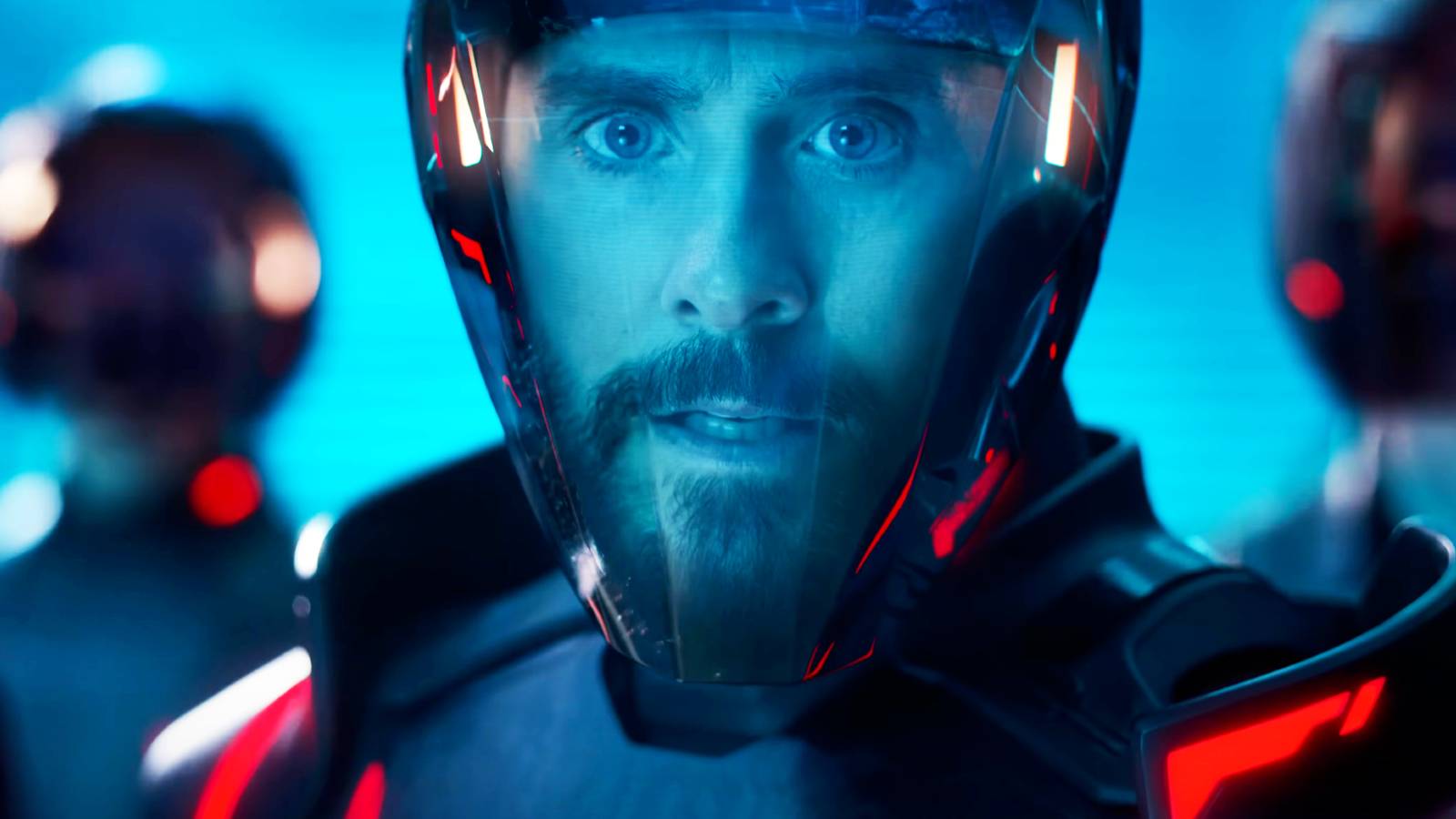
By the end, Eve outsmarts her rivals, retains control of the code, and destroys Dillinger’s grid with a virus. Julian vanishes into his server, and Ares—newly self-aware—escapes into the human world, free from corporate control. The finale balances hope with uncertainty, leaving Eve to shape humanity’s future and Ares to explore his own.
Eve Kim’s Mission to Use Technology for Good
Eve’s journey represents the heart of the story. After inheriting Encom and losing her sister Tess, she battles moral conflict over how far technology should go in changing the world. The final scene of her picking an orange from a digital tree symbolizes rebirth and her intent to use innovation ethically. Yet, the franchise’s history warns that noble tech ambitions rarely stay pure. The next installment could challenge Eve’s ideals as rivals inevitably emerge to seize her discoveries.
Ares’ Transformation and Quest Beyond the Grid
Though marketed around Jared Leto, the emotional payoff belongs to Ares’ evolution. No longer a weapon, he chooses life and empathy over programming. The closing moments show him in Mexico, living anonymously, sending a postcard to Eve—a gesture proving he has learned humanity’s most essential trait: connection.

Ares’ arc subtly bridges him with legacy characters. When he looks at a photograph of Quorra (Olivia Wilde), the self-aware program from Tron: Legacy, fans realize the story isn’t over. His search for others “like him” may finally unite the real and digital worlds through characters we haven’t seen in over a decade.
The Mid-Credits Scene: The Return of Sark
No Tron movie is complete without a classic villain twist. In the mid-credits scene, Julian Dillinger’s consciousness merges with a mysterious data disk inside his shattered grid. The transformation sequence reveals him wearing the familiar red-and-gray armor of Sark—the original 1982 antagonist. This shocking callback implies a rebooted villain—Sark 2.0—is back to rule cyberspace once again.
The parallels between Julian and Sark underline the franchise’s central theme: the corruption of power through technology. Future stories could see Julian rebuilding the Grid under his control, setting up a clash between his digital empire and Ares’ newfound independence.
Setting the Stage for Tron 4
TRON: Ares social media embargo lifts at 12:30am EST. Review embargo lifts tomorrow at 12pm EST
byu/Matapple13 intron
The ending of Tron: Ares clearly builds toward a fourth film. With Eve Kim’s humanitarian mission, Ares’ search for identity, and Sark’s rebirth, the next chapter promises a collision of ideologies—human ambition, digital evolution, and AI rebellion. It may even reconnect threads from the animated series Tron: Uprising, deepening the franchise’s mythos.
Whether Disney greenlights another sequel will depend on box office and streaming performance. But narratively, the blueprint is set: Ares’ quest for belonging, Eve’s moral leadership, and Sark’s resurrection could shape the next great cyber-war.
Fan Buzz and Nostalgia
Fans have praised Tron: Ares for blending modern visuals with vintage callbacks, from the Depeche Mode soundtrack cue to references to Kevin Flynn (Jeff Bridges). While critics remain divided on its pacing, many agree the film rekindles the neon pulse that defined the original. Social media discussions are buzzing with speculation about a Tron 4, particularly after that Sark reveal.
Tron: Ares Trailer Highlights
The official trailer showcased breathtaking CGI, glowing suits, and high-octane disc battles that recall the original’s arcade charm. It teased Encom’s rivalry, Ares’ awakening, and the moral tug-of-war between creation and control—giving fans a glimpse into both the real world and the digital frontier of the Grid.
FAQs About Tron: Ares
1. Is Tron: Ares a sequel to Tron: Legacy?
Yes, it continues after Tron: Legacy, referencing Sam Flynn and Quorra’s disappearance.
2. Does Jared Leto play the hero or villain?
Leto’s Ares begins as a weapon but evolves into a self-aware, empathetic being.
3. Who is the new villain in the film?
Julian Dillinger transforms into Sark 2.0, reviving the original antagonist’s legacy.
4. Will Sam Flynn and Quorra return?
The ending hints at their survival, suggesting they may reappear in a future sequel.
5. What message does Tron: Ares leave audiences with?
It explores how humanity and AI might coexist—balancing creation, ethics, and control.
Conclusion
Tron: Ares ends with both resolution and rebirth, inviting fans to imagine what lies ahead for Eve, Ares, and the resurrected Sark. The Grid’s next evolution could redefine the boundary between man and machine—where empathy meets intelligence in a glowing digital frontier.
What did you think of Tron: Ares’ ending? Share your theories and favorite moments in the comments on trendingnewsbuzz.com!
