

Netflix’s Adolescence has been one of the most impactful series of 2025, winning critical acclaim for its raw portrayal of online radicalization, bullying, and violence. The limited series, created by Stephen Graham and Jack Thorne, follows Jamie Miller (played by Owen Cooper) as he faces the consequences of his actions after being accused of murdering his classmate, Katie. As the season finale approaches, the show leaves viewers questioning Jamie’s motives, his guilt, and the societal issues that shaped him. Here’s a deep dive into the ending, exploring whether Jamie really killed Katie, and what the show ultimately says about parenting in the age of online influence.
Did Jamie Really Kill Katie?
Throughout Adolescence, Jamie repeatedly asserts his innocence, but the evidence against him is compelling. CCTV footage of the stabbing and a slip-up in his conversation with psychologist Briony (played by Erin Doherty) strongly suggest that Jamie did indeed kill Katie.
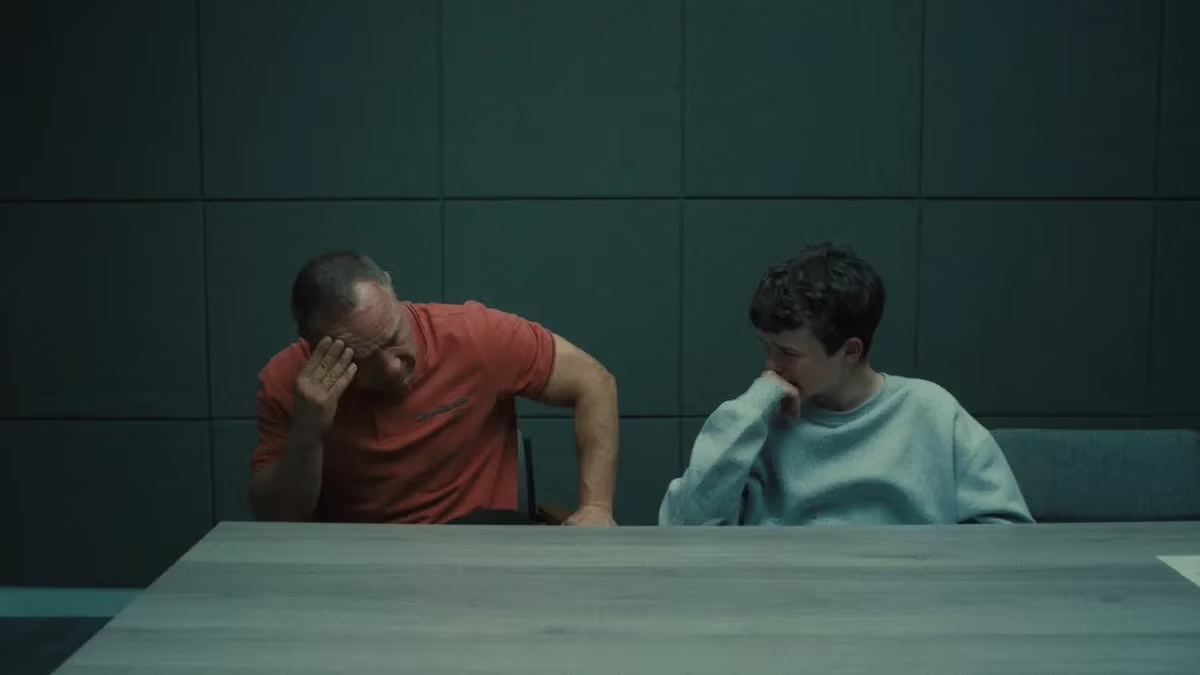
Despite this, Jamie never fully admits to the crime. His change in plea to “guilty” in the final episode hints that, deep down, he knows what he’s done. After a tense phone call with his father Eddie (played by Stephen Graham), Jamie apologizes, not just for changing his plea, but also for the lies he told about his innocence. His apology could be seen as an admission of guilt, signifying that Jamie understands the gravity of his actions and the harm they’ve caused.
Why Did Jamie Change His Plea?
In the final episode, Jamie decides to change his plea to “guilty.” The exact reason for this shift is left somewhat ambiguous, but the psychological toll of his actions and the approaching trial date are likely factors.
As co-creator Jack Thorne explained, by the end of the series, Jamie has reached a point of self-awareness. He realizes what he has done and is now prepared to face the consequences, even if that means closing off his emotions. The change in his plea marks a turning point in Jamie’s journey, where he is no longer running from the truth.
Director Philip Barantini compared this moment to a heartbreaking scenario where a family finally accepts that a loved one is beyond saving. Jamie’s guilty plea is the emotional climax of his character arc, where he confronts his actions and the irreversible damage he has done.
The Role of the “Manosphere” in Jamie’s Crime

One of the most powerful themes of Adolescence is the influence of online radicalization, specifically from incel communities and the “manosphere.” Throughout the series, Jamie’s dialogue reveals his deep-seated misogyny, which is heavily influenced by toxic online spaces.
Jamie subscribes to the belief that women are inherently rejecting and that men like him are doomed to loneliness because of their appearance. This warped view of the world leads him to bully Katie after she rejects his advances and cyberbully him on social media. Katie’s dismissal and the cruel messages she sends push Jamie over the edge, triggering the violence that ends in her death.
The series highlights how these online ideologies can feed into dangerous behaviors, particularly in young people who already feel marginalized and powerless. It serves as a warning to parents about the potentially harmful influence of unregulated online spaces.
How Does Jamie’s Family React to the Crime?
The fallout from Jamie’s crime affects his entire family, especially his father Eddie, who struggles to understand how his parenting could have led to such a tragic outcome. The final episode shows Eddie grappling with guilt, wondering if his failure to connect with Jamie caused his son’s descent into violence.
Eddie’s own upbringing, where he was abused by his father, plays a crucial role in shaping his complex feelings of inadequacy as a parent. The emotional weight of this realization is devastating for Eddie, who is unable to look at his son without seeing his own shortcomings.
Meanwhile, Manda (played by Christine Tremarco), Eddie’s wife, tries to stay strong for the family, but the emotional strain is evident. Their daughter Lisa (Amélie Pease) is also affected by the crime, as she faces bullying at school due to her family’s notoriety. However, Lisa handles the situation with maturity, providing a quiet strength for her parents.
Despite the immense challenges, the Miller family remains united. However, the damage caused by Jamie’s actions is irreversible, and their lives will never be the same.
What Does the Ending of Adolescence Mean?
The final scene of Adolescence takes place in Jamie’s room, where his father tucks a teddy bear into bed, as if caring for the innocent child Jamie used to be. This powerful image underscores the tragic transformation Jamie has undergone — from a confused and lonely teen to a violent criminal.
The ending also highlights the broader message of the series: the dangers of online radicalization and the lack of understanding between generations. Adolescence explores how parental love and care can be insufficient in the face of overwhelming external influences, and how vulnerable young people are to manipulation in today’s digital age.
Ultimately, the series serves as a poignant warning to parents about the importance of communication and understanding in the digital age. It also emphasizes the need for greater awareness of the risks posed by online communities that perpetuate hatred and misogyny.
FAQs About Adolescence Ending
1. Did Jamie kill Katie?
Yes, the evidence strongly suggests that Jamie did murder Katie, despite his initial denial.
2. Why did Jamie change his plea to guilty?
Jamie changed his plea after coming to terms with the fact that he was responsible for Katie’s death and the consequences of his actions.
3. How does the “manosphere” influence Jamie’s actions?
Jamie’s involvement in the “manosphere” fueled his misogyny and self-loathing, which ultimately led him to commit violence against Katie after being rejected.
4. How does Jamie’s family react to his crime?
Jamie’s parents, Eddie and Manda, struggle with guilt and confusion over their son’s actions, with Eddie questioning his parenting.
5. What is the key message of the series?
Adolescence warns parents about the dangers of online radicalization and highlights the importance of communication and understanding in today’s digital age.
Final Thoughts
Adolescence is a deeply emotional and thought-provoking series that tackles the harsh realities of online influence, bullying, and violence. Jamie’s journey from a lonely, misunderstood teen to a murderer is both tragic and chilling, and the series’ powerful ending leaves viewers with a poignant message about the complexities of modern parenting.
What are your thoughts on Jamie’s transformation? Share your views in the comments and join the conversation on TrendingNewsBuzz.com!
