

Kathryn Bigelow’s A House of Dynamite has finally landed on Netflix after its Venice Film Festival debut and limited theatrical run — and it’s already sparking intense conversations. The gripping nuclear thriller, written by journalist-turned-screenwriter Noah Oppenheim, dives deep into the terrifying question: What would really happen if a nuclear missile were launched toward the United States?
With powerhouse performances from Rebecca Ferguson as a White House Situation Room official and Idris Elba as the President of the United States, the film unravels a minute-by-minute depiction of a government responding to a nuclear strike — in real time. But its haunting ending leaves audiences questioning everything: Can a missile actually be stopped in time? And what choice does the President make?
Let’s unpack the ending, meaning, and message behind A House of Dynamite.
The Real-Time Premise: 18 Minutes to Decide Humanity’s Fate
At its core, A House of Dynamite is built on one chilling fact — if a nuclear missile were launched toward the U.S. from the Pacific, it would take roughly 18 minutes to reach its target.
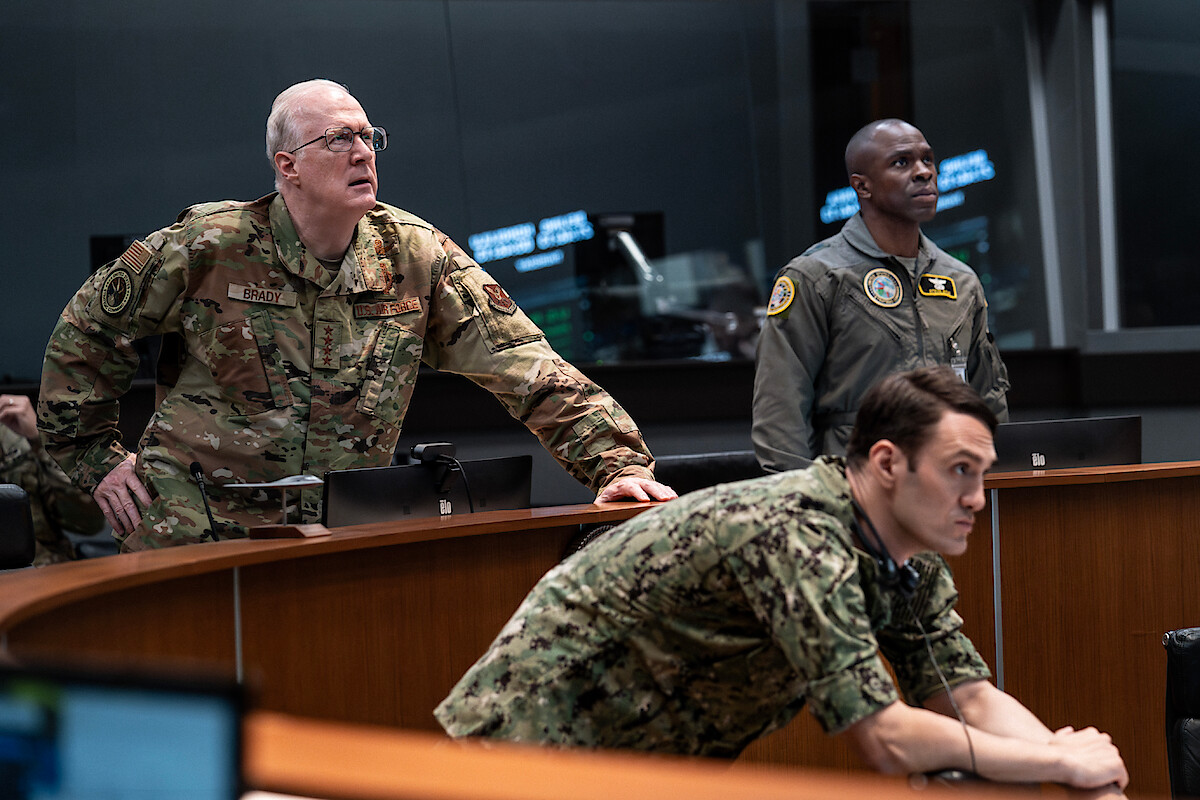
That impossibly short window forms the basis of the film’s real-time structure. Oppenheim, a former NBC News president, revealed that he conducted extensive research with Pentagon, CIA, and White House officials to ensure the accuracy of every minute depicted.
“We wanted the audience to experience viscerally just how short 18 minutes is,” Oppenheim told Radio Times. “It’s an insane amount of time to decide the fate of mankind.”
Through three overlapping perspectives — lower-level staffers, high-ranking generals, and finally the President — the film places viewers inside the escalating panic of the Situation Room as the United States faces the unthinkable.
‘A House of Dynamite’ Ending Explained
The ending of A House of Dynamite is intentionally ambiguous, designed to leave audiences suspended in uncertainty. Each of the film’s three sections ends just seconds before the missile hits Chicago — and crucially, before the President makes his decision.
In the final act, President (played by Idris Elba) sits deep inside a secure bunker, presented with two devastating options by Lieutenant Commander Robert Reeves (Jonah Hauer-King):
- Launch a retaliatory strike, risking full-scale nuclear war.
- Hold fire, possibly allowing a second missile to strike the U.S.
The film cuts to black before revealing his choice. The silence that follows is deafening — leaving viewers to wrestle with what they would do in his place.
Why the Film Ends Without an Answer
According to Oppenheim and director Kathryn Bigelow, the decision to end without closure was deliberate.

“We chose that ending because any other ending would let the audience off the hook,” Oppenheim explained. “If we showed the world being saved or destroyed, people could leave the theater saying, ‘It’s over.’ But the reality is — it’s not over. We still live in a world with thousands of nuclear weapons ready to launch.”
Bigelow’s approach mirrors her work on Zero Dark Thirty and The Hurt Locker — refusing to offer neat resolutions, instead forcing audiences to confront uncomfortable truths.
Actor Jason Clarke, who plays a senior Situation Room official, described the experience perfectly:
“This film doesn’t leave it with the movie — it leaves it with the audience. You walk out asking, ‘What would I do?’”
The Themes Behind the Cliffhanger
The open-ended finale isn’t just about suspense — it’s a statement on power, morality, and the fragility of human decision-making. The film emphasizes one terrifying reality: a single person holds the power to start a nuclear war.
View this post on Instagram
As Rebecca Ferguson noted in interviews, this idea hit especially hard during filming:
“One human being sits on the power to start a nuclear war. And when that hits, it hits hard.”
The film’s real-time storytelling forces viewers to live through those agonizing 18 minutes — understanding that no amount of preparation can make such a decision rational.
What the Ending Symbolizes
The ending of A House of Dynamite serves as a mirror to our world — one still shadowed by the presence of thousands of nuclear warheads on hair-trigger alert. The President’s indecision reflects our collective uncertainty about deterrence, retaliation, and survival in the nuclear age.
By refusing to answer whether the missile hits or not, Bigelow ensures the audience can’t simply escape the moral weight of the story. Instead, we’re left with haunting questions:
- What if this scenario really unfolded tomorrow?
- Can humanity trust one person — or any system — with the power to destroy the world?
- And what would we want our leaders to choose?
The Real Message: A Wake-Up Call
Beyond its cinematic tension, A House of Dynamite is a stark reminder of how fragile peace truly is. It blends the thrill of a political drama with a sobering warning — that the systems meant to protect us are still governed by human fear, instinct, and error.
Oppenheim summed up the film’s core message best:
“We’re not making a movie about fiction. We’re making a movie about the world we actually live in. And that’s the scariest part.”
FAQs
1. What happens at the end of A House of Dynamite?
The movie ends moments before the missile hits Chicago and before the President makes his final decision, leaving the outcome ambiguous.
2. Why is the ending open-ended?
Director Kathryn Bigelow and writer Noah Oppenheim wanted to keep viewers engaged with the film’s core question — what kind of world do we want to live in? — instead of offering closure.
3. Who plays the U.S. President in the movie?
Idris Elba portrays the President, with Rebecca Ferguson starring as a Situation Room advisor.
4. Is A House of Dynamite based on real events?
While fictional, the film is grounded in extensive research about real nuclear response protocols and timeframes.
5. What is the main theme of the film?
The film explores the ethics of nuclear deterrence, human decision-making under pressure, and the terrifying shortness of time leaders have to respond in a nuclear crisis.
Final Thoughts
With A House of Dynamite, Kathryn Bigelow once again delivers a heart-pounding, thought-provoking thriller that lingers long after the credits roll. Its ending doesn’t offer comfort — and that’s exactly the point.
The movie doesn’t just depict an 18-minute countdown; it forces us to confront the fragile reality we live in — one decision away from catastrophe.
Watch A House of Dynamite streaming now on Netflix, and decide for yourself what you think the President chose.
Stay tuned to TrendingNewsBuzz.com for the latest entertainment analyses, streaming updates, and movie breakdowns.
